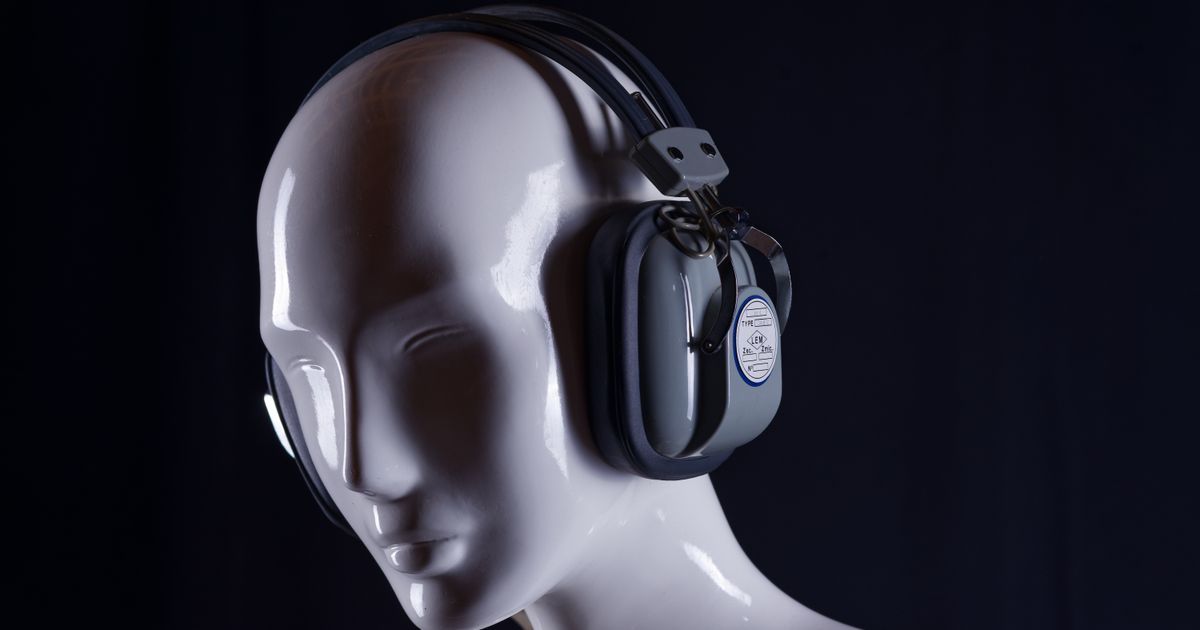
Put on a pair of active noise-cancelling headphones on an airplane and the engine drone seems to fade, even with no music playing. That effect is not just foam blocking sound. It is a real-time audio trick happening dozens of thousands of times per second, where the headphones listen to the noise around you and then generate a second sound wave specifically shaped to cancel it out.
The principle behind this, called active noise cancellationA headphone feature that uses built-in microphones to 'listen' to outside noise, then plays an opposite sound wave to cancel it out, making the world around you sound quieter. More in the glossary or ANC, relies on a property of sound waves called phase. Two identical sound waves that are perfectly out of step with each other combine to produce silence, because wherever one wave pushes air molecules outward, the other pulls them inward by the same amount. Headphones exploit this by constantly measuring incoming noise and building an inverted copy of it in real time.
This page includes a step-by-step interactive diagram of that anti-noise waveform, showing how the original noise wave and the generated cancelling wave line up and cancel. Seeing the two waveforms side by side makes it much clearer why ANC works beautifully on some sounds and barely touches others.
A small external microphone on the headphone constantly picks up the shape of the ambient noise around you — engine rumble, HVAC hum, airplane cabin noise.
A processor generates a second waveform that is the exact inverse ("anti-phase") of that noise — the peaks and dips are flipped.
When the speaker plays that inverted wave at the same time the real noise reaches your ear, the two waveforms add together and largely cancel each other out, leaving mostly quiet.
Read the full text description
- An external microphone on the headphone continuously picks up the shape of nearby ambient noise.
- A processor generates an inverted, "anti-phase" version of that same waveform — essentially its mirror image.
- The headphone speaker plays that inverted wave at the same moment the real noise reaches your ear, and the two waveforms combine and largely cancel out, which is why cabin rumble and steady hums fade noticeably while sudden, unpredictable sounds are only partly reduced.
Sound waves and the idea of phase
Sound travels as a wave of alternating high and low air pressure. If you could freeze a sound wave in place and look at it, you would see it rise above normal air pressure, fall below it, and repeat that pattern over and over, many times per second. The position a wave is at in that repeating cycle at any given instant is called its phase.
Two sound waves of the same shape and strength but opposite phase will cancel each other out completely if they combine in the same place at the same time. This is not a theoretical curiosity; it is simple physics, the same reason that dropping two overlapping ripples into a pond, timed just right, can leave a flat patch of water where they meet. Noise-cancelling headphones are built around recreating that cancellation for sound, continuously, in real time, inside your ear.
The microphones doing the listening
A pair of ANC headphones contains small microphones built into the earcups, sometimes on the outside facing the room, sometimes on the inside facing your ear, and often both. The outward-facing microphones pick up the noise in the environment before it reaches your ear, such as the steady rumble of an airplane engine or the hum of an air conditioner. The inward-facing microphones, when present, listen to what is actually arriving at your eardrum after passing through the headphone's physical seal, which lets the system double-check its own work.
These microphones feed a continuous stream of audio into a small onboard processor dedicated entirely to this task. The processor's job is to analyze the incoming noise and build a cancelling signal fast enough that it can be played back before the real noise arrives at your eardrum, all within a few thousandths of a second.
Building the anti-noise signal
Once the processor has a picture of the incoming noise, it creates an inverted version of that same waveform, essentially a mirror image where every rise becomes a fall and every fall becomes a rise. This inverted signal is sent to the headphone's speaker driver and played at the same time the original noise arrives at your ear.
When the real noise wave and the generated anti-noise wave meet at your eardrum, they overlap and largely cancel each other out, leaving much quieter air pressure than either wave alone. You do not hear two sounds fighting each other; you hear the absence of sound, because the two waveforms have effectively erased one another before your ear can register them as noise.
Why ANC is better at some sounds than others
This cancellation trick works best on sounds that are steady, repetitive, and low in pitch, which describes engine drones, HVAC hums, and the broad rush of highway or cabin noise extremely well. These sounds change slowly and predictably, giving the processor enough time to generate an accurate inverted copy before the real sound arrives.
Sudden or high-pitched sounds are much harder to cancel. A sharp dog bark, a door slam, or someone's high voice changes too quickly for the processor to keep up, since building and playing an accurate anti-noise wave takes a small but real amount of time. By the time the cancelling signal is ready, the original sound has already changed shape or already reached your ear. This is why noise-cancelling headphones noticeably quiet a plane cabin but still let through nearby conversation and sudden sounds.
ANC versus passive noise blocking
It helps to separate active noise cancellation from passive noise isolation, which is simply the physical blocking of sound by the earcup material and cushion seal, the same way foam earplugs work. Passive isolation reduces all sounds somewhat, with better results at higher pitches, and it requires no electronics or power at all.
Most real noise-cancelling headphones combine both effects: the physical earcup blocks some sound passively just by sitting over or in your ear, and the active electronics add further cancellation on top, mostly targeting the low-pitched, steady sounds that passive blocking struggles with. That combination is why good ANC headphones quiet a room more thoroughly than either approach alone.
The trade-offs built into the system
Running microphones and a dedicated audio processor continuously draws battery power, which is why ANC headphones have a separate battery drain for noise cancellation beyond whatever is used for playing music. Some headphones let you turn ANC off specifically to extend battery life or to stay aware of your surroundings.
There is also a subtle side effect some people notice called pressure or a feeling of fullness in the ears, which comes from the cancellation process interacting with very low frequency air pressure changes inside a sealed earcup. Manufacturers tune their systems to minimize this, with varying success, which is one reason the exact feel of ANC differs noticeably between different headphone designs.
A single noise-cancelling cycle, step by step
- An outward-facing microphone picks up the steady drone of an airplane engine arriving at the headphone.
- The onboard processor analyzes the shape of that incoming sound wave in real time.
- The processor generates an inverted copy of the wave, flipping every peak into a dip and every dip into a peak.
- The headphone's speaker driver plays that inverted wave at the same moment the real noise reaches your ear.
- The two waves overlap and largely cancel, leaving much quieter air pressure at your eardrum than the original noise alone.
- An inward-facing microphone, where present, checks the result and feeds that information back to fine-tune the next cycle.
Common Mistakes
- Thinking noise cancellation blocks all sound equally; it is far more effective on steady, low-pitched noise than on sudden or high-pitched sounds.
- Confusing active noise cancellation with the passive sound blocking of the earcup material, which are two separate effects that happen to work together.
- Assuming a feeling of ear pressure during ANC use means something is broken, when it is a known side effect of the cancellation process for some listeners.
- Expecting ANC to work the same with music off as with music on; some of the perceived quiet during music playback also comes from the music masking remaining noise.
Frequently Asked Questions
Does active noise cancellation work with no sound playing at all?
Yes. ANC works independently of whether music is playing, since it is a separate circuit generating an inverted version of the ambient noise regardless of other audio.
Why do noise-cancelling headphones need a battery?
The microphones, processor, and extra signal generation involved in building the cancelling wave all require continuous power, unlike passive earcups which block sound with no electronics at all.
Can noise cancellation make certain sounds louder by mistake?
In rare cases, if the timing or shape of the generated anti-noise wave is slightly off, it can reinforce part of a sound instead of cancelling it, though well-engineered systems minimize this.
Is noise cancellation the same thing as noise isolation listed on a product?
No. Noise isolation typically refers to the passive physical blocking from the earcup fit, while noise cancellation refers specifically to the active electronic process described here.
Sources
- Audio Engineering Society — technical resources on audio and acoustics — https://www.aes.org/
- IEEE Spectrum — explainers on audio and signal processing technology — https://spectrum.ieee.org/