Explorer
Explore All Guides
Search and filter all 45 GadNest guides by category, level, and reading time.
All guides
45 guides found
No guides match these filters yet.
Try clearing the search box or choosing a different category or level.
 beginner 6 min read
How a Capacitive Touchscreen Detects Your Finger
Capacitive touchscreens detect your finger by sensing a disturbance in an invisible electrical field just above the glass, not by feeling pressure.
Screens and Touch
 beginner 6 min read
Why Your Screen Sometimes Ignores Light Taps
Touchscreens require a touch to clear certain signal thresholds before it counts, which is why light, fast, or edge-of-screen taps are sometimes ignored.
Screens and Touch
 intermediate 6 min read
OLED vs LCD: What Actually Lights Up Your Screen
LCD screens filter a constant backlight, while OLED pixels generate their own light, and that one structural difference explains most of what sets the two apart.
Screens and Touch
 beginner 6 min read
Why Phone Screens Crack More Easily Than They Used To
Thinner glass, larger edge-to-edge screens, and lighter bodies all make modern phones more prone to cracking, even though the glass itself has improved.
Screens and Touch
 beginner 6 min read
What 'Refresh Rate' Means and Why 120Hz Feels Smoother
Refresh rate measures how many times per second a screen redraws its image, and higher rates make motion look smoother at the cost of more battery use.
Screens and Touch
 intermediate 6 min read
How Screen Protectors Affect Touch Sensitivity
Screen protectors rarely hurt touch sensitivity when thin and well installed, but thickness, trapped air, and poor adhesion can noticeably weaken response.
Screens and Touch
 beginner 6 min read
Why Touchscreens Struggle With Gloves and Wet Fingers
Gloves block a touchscreen's electrical signal almost entirely, while water adds extra unwanted signal, causing two very different kinds of touch problems.
Screens and Touch
 intermediate 6 min read
What Pixel Density (PPI) Actually Changes on a Screen
Pixel density combines resolution and screen size to describe how tightly packed pixels are, and its visible benefit depends heavily on viewing distance.
Screens and Touch
 beginner 6 min read
How Auto-Brightness Sensors Decide How Bright Your Screen Should Be
An ambient light sensor measures surrounding light, and software maps that reading to a screen brightness level, with a deliberate delay to avoid flicker.
Screens and Touch
 beginner 7 min read
How a Lithium-Ion Battery Actually Charges
Charging a lithium-ion battery happens in two distinct electrical stages, not one steady process, which is why speed changes dramatically as the battery fills up.
Power and Batteries
 intermediate 8 min read
Why Batteries Degrade Over Time, Even Without Use
Lithium-ion batteries lose capacity gradually through both use and simple time, and heat together with storage charge level makes the biggest difference.
Power and Batteries
 beginner 7 min read
Safe Charging Habits That Actually Protect Battery Life
The handful of charging habits that genuinely matter for lithium-ion battery health, condensed into a short printable checklist.
Power and Batteries
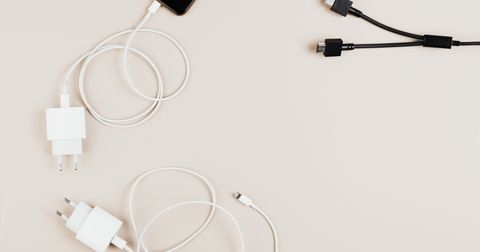 intermediate 7 min read
What Fast Charging Really Does Inside Your Device
Fast charging speeds up the early part of a charge through higher current and device-charger negotiation, but it slows down just like standard charging near full.
Power and Batteries
 beginner 7 min read
Why Phones Get Warm While Charging
Phones warm up while charging because of resistive heating, chemical reactions, and sometimes active use layered on top, not because of a single cause.
Power and Batteries
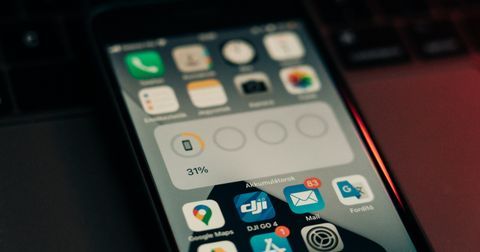 intermediate 7 min read
What Battery Percentage Actually Measures
The battery percentage you see is a calculated estimate built from voltage and current tracking, not a direct physical measurement of stored energy.
Power and Batteries
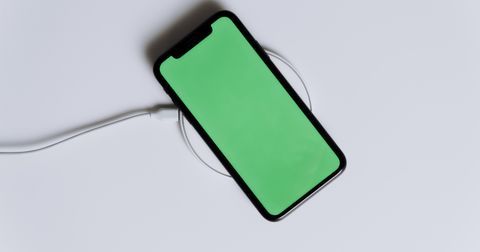 beginner 6 min read
How Wireless (Qi) Charging Works Without a Cable
Qi wireless charging sends power across a small gap using magnetic fields instead of a cable, which explains both its convenience and its limits.
Power and Batteries
 beginner 7 min read
Why Cold and Hot Weather Affect Battery Performance
Cold temperatures slow battery chemistry temporarily, while heat causes lasting capacity loss, and the two effects work in very different ways.
Power and Batteries
 intermediate 7 min read
What Happens Inside a Battery During a Full Discharge
A full battery discharge involves several distinct phases, and the 0% on your screen is a safety cutoff, not a truly empty battery.
Power and Batteries
 beginner 6 min read
How Bluetooth Pairing Actually Works
Bluetooth pairing looks like one tap, but underneath it two devices discover each other, agree on a shared secret, and save it so they can reconnect automatically next time.
Wireless and Connectivity
 intermediate 8 min read
Wi-Fi vs Bluetooth vs NFC: What Each One Is Actually For
Wi-Fi, Bluetooth, and NFC all send data through the air, but they're built for different jobs: covering a house, linking nearby accessories, or confirming two things are touching.
Wireless and Connectivity
 beginner 7 min read
Why Your Wi-Fi Gets Slower the Farther You Walk
Wi-Fi doesn't just switch off at a distance, it gradually loses signal strength and clarity, so your devices automatically fall back to slower, more reliable speeds.
Wireless and Connectivity
 intermediate 7 min read
What the Numbers in Wi-Fi Names Like 802.11ac Mean
Wi-Fi standards carry confusing names like 802.11ac or Wi-Fi 6, but each one is really just a version number describing speed, frequency, and compatibility.
Wireless and Connectivity
 beginner 7 min read
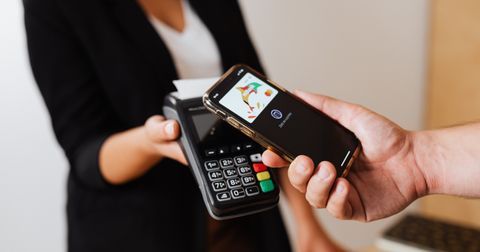
How NFC Lets You Tap to Pay or Share a File
Tapping a phone or card to pay uses a short-range radio technology called NFC, which powers a tiny chip and swaps a one-time secure code in a fraction of a second.
Wireless and Connectivity
 intermediate 7 min read
Why Bluetooth Devices Sometimes Lag or Drop Audio
Bluetooth audio delays and dropouts usually come from crowded radio airwaves, obstacles between devices, or the compression needed to fit sound into a narrow wireless channel.
Wireless and Connectivity
 intermediate 7 min read
What a Mesh Wi-Fi System Actually Does Differently
A mesh Wi-Fi system uses several coordinated nodes that share one network and hand devices off smoothly, instead of relying on a single router or a simple signal repeater.
Wireless and Connectivity
 beginner 7 min read
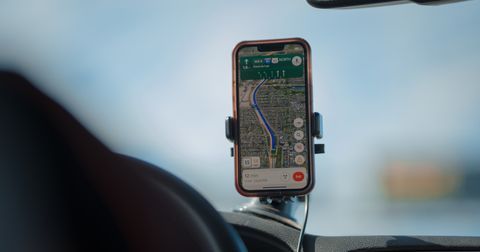
How GPS Figures Out Your Exact Location
GPS finds your location by timing radio signals from several satellites and using the tiny differences in arrival time to calculate exactly where you are on Earth.
Wireless and Connectivity
 beginner 7 min read
Why Airplane Mode Turns Off Some Signals But Not Others
Airplane mode is really several separate radio switches bundled into one button, which is why Wi-Fi, Bluetooth, or GPS can sometimes stay active even after you turn it on.
Wireless and Connectivity
 beginner 7 min read
How a Phone Camera Sensor Captures Color
A phone camera sensor cannot see color on its own. It measures brightness through a grid of tiny color filters, and software fills in the rest to build the photo you see.
Sensors, Cameras and Audio
 intermediate 8 min read
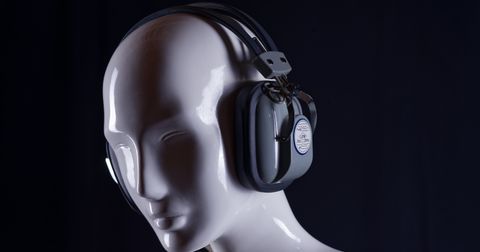
How Noise-Cancelling Headphones Actually Cancel Noise
Noise-cancelling headphones listen to the sound around you with tiny microphones and generate an opposite sound wave that cancels it out before it reaches your eardrum.
Sensors, Cameras and Audio
 beginner 7 min read
How a Microphone Turns Sound Into Data
A microphone converts the physical vibration of sound in the air into an electrical signal, which a phone then samples thousands of times per second to store as digital data.
Sensors, Cameras and Audio
 intermediate 8 min read
What the Megapixel Number Actually Tells You About a Camera
A megapixel count tells you how many individual points of light a camera sensor can capture, but it says nothing about photosite size, lens quality, or processing, all of which matter just as much.
Sensors, Cameras and Audio
 beginner 7 min read
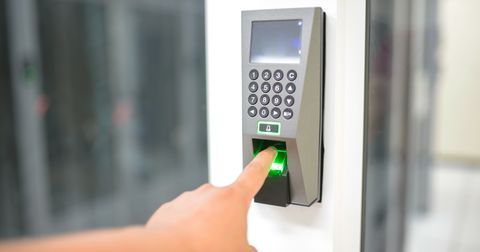
How Fingerprint Sensors Recognize Your Finger
A fingerprint sensor maps the ridges and valleys of your fingertip into a digital pattern, then compares that pattern against a stored template to decide whether it matches closely enough.
Sensors, Cameras and Audio
 intermediate 8 min read
How Face Unlock Tells You Apart From a Photo
Face unlock systems build a three-dimensional map of facial geometry using depth-sensing hardware, which is what lets them tell a real face apart from a flat photo of one.
Sensors, Cameras and Audio
 beginner 7 min read
How Optical and Digital Zoom Are Actually Different
Optical zoom physically changes how a lens focuses light to magnify a scene before it reaches the sensor, while digital zoom simply crops and enlarges the image afterward, with no new detail added.
Sensors, Cameras and Audio
 intermediate 8 min read
What a Gyroscope and Accelerometer Each Do in Your Phone
An accelerometer senses changes in speed and direction, including gravity's pull, while a gyroscope senses rotation around an axis, and phones combine both to track motion accurately.
Sensors, Cameras and Audio
 beginner 7 min read
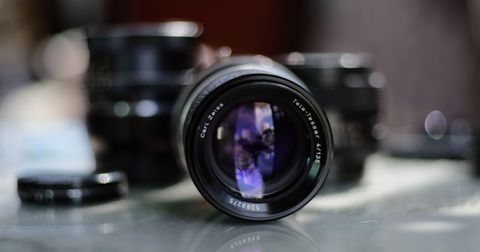
How Autofocus Decides What Part of a Photo Stays Sharp
A phone camera's autofocus system constantly moves lens elements and checks the resulting image sharpness, or directly measures focus error, to decide which part of a scene stays crisp.
Sensors, Cameras and Audio
 beginner 7 min read
How a Smart Speaker Knows You Said Its Wake Word
Smart speakers use a small, always-on chip to listen only for a specific wake-word pattern, keeping that process separate from the cloud systems that handle your actual questions.
Smart Home and Wearables
 intermediate 6 min read
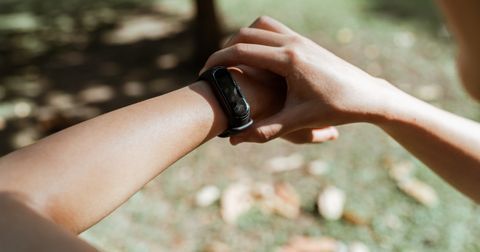
How a Fitness Tracker Measures Your Heart Rate
Wearables estimate heart rate by shining light into the skin and measuring how reflection changes with each pulse of blood, a method called photoplethysmography.
Smart Home and Wearables
 beginner 6 min read
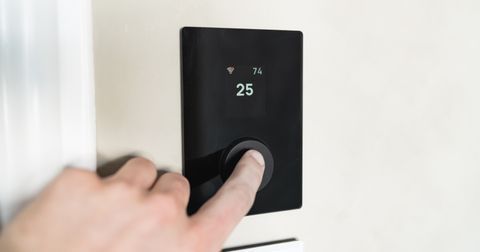
How a Smart Thermostat Learns Your Schedule
Smart thermostats build a schedule by tracking repeated manual adjustments and occupancy signals over days or weeks, then automating the pattern they detect.
Smart Home and Wearables
 intermediate 6 min read
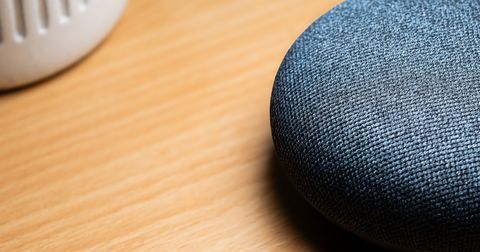
What Actually Happens When You Ask a Smart Speaker a Question
A voice question travels from local wake-word detection through cloud-based speech recognition, intent interpretation, data retrieval, and text-to-speech, all in under a second.
Smart Home and Wearables
 beginner 6 min read
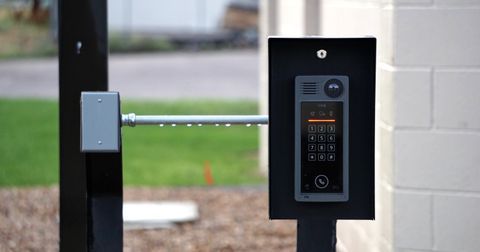
How Smart Locks Decide Who's Allowed In
Smart locks check a credential, a code, fob, phone, or fingerprint, against a stored access list, then trigger a small motor to move the same kind of mechanical bolt a traditional key would.
Smart Home and Wearables
 intermediate 6 min read
How Sleep Tracking on a Wearable Actually Works
Wearables estimate sleep timing and stages by analyzing movement and heart-rate patterns, producing useful personal trends rather than clinical, diagnostic results.
Smart Home and Wearables
 beginner 6 min read
How a Smart Plug Controls Power Without a Physical Switch
A smart plug uses a low-power wireless control chip to trigger a relay, an electrically controlled switch, which physically turns household power on or off.
Smart Home and Wearables
 intermediate 6 min read
Why Smart Home Devices Need a Hub (or Don't Anymore)
Whether a smart home device needs a hub depends on its wireless technology; Wi-Fi devices connect directly, while Zigbee, Z-Wave, and Thread devices rely on a translating bridge.
Smart Home and Wearables
 beginner 6 min read
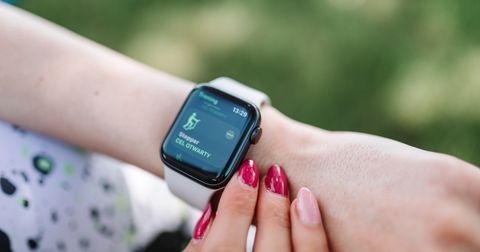
How Step Counting on a Wearable Actually Works
Wearables count steps by detecting a sustained, repeating motion pattern from an accelerometer, not by directly sensing your feet, which explains their occasional miscounts.
Smart Home and Wearables