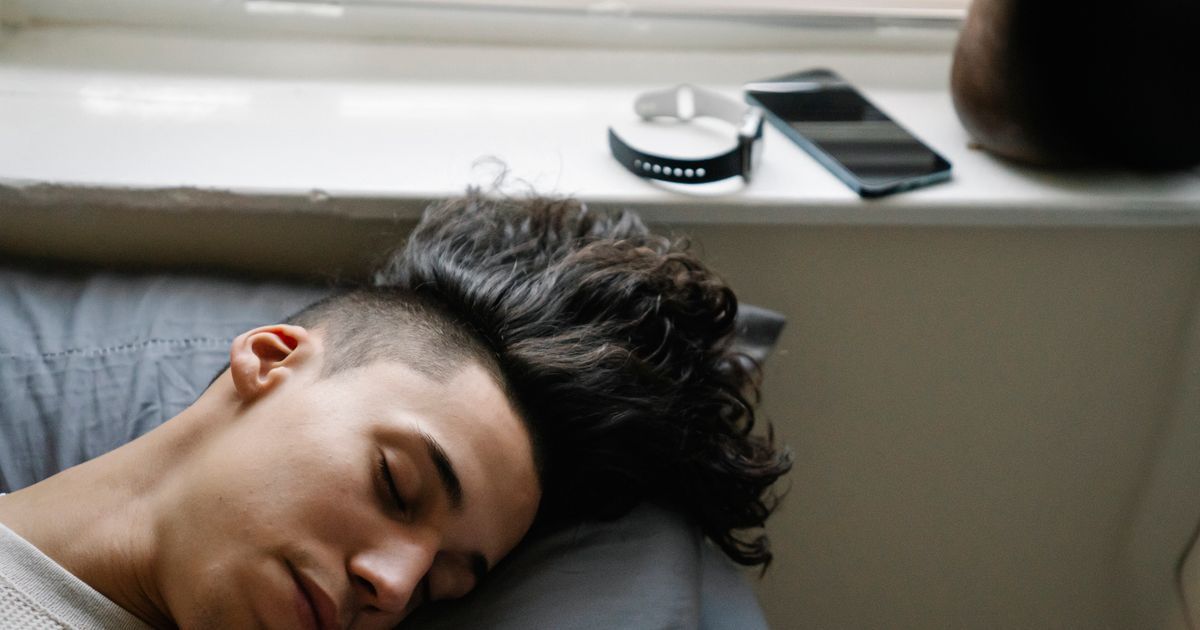
A sleep-tracking wearable can tell you roughly when you fell asleep, how often you stirred overnight, and give you a rough breakdown of sleep stages, all without any wires connecting you to a lab. It does this using two signals it already has on hand for other reasons: a motion sensor originally meant for counting steps, and in many cases the same optical heart-rate sensor used during the day.
That combination can produce a genuinely useful, personal record of your sleep patterns over time. It is also fundamentally different from a clinical sleep study, which uses specialized equipment and trained technicians to directly measure brain activity, eye movement, and muscle tone. Understanding the gap between the two helps set realistic expectations for what a wearable's sleep data can and can't tell you.
This article explains what the wearable is actually measuring while you sleep, how it estimates sleep stages, and why it is an estimate rather than a diagnostic reading.
The Two Signals a Wearable Relies On
The primary input for most wearable sleep trackingA wearable feature that estimates how long and how well you slept, usually using movement, heart rate, and sometimes blood oxygen sensors to guess your sleep stages overnight. More in the glossary is an accelerometerA sensor that detects movement and changes in speed, like shaking, tilting, or stepping. It's used for things like counting steps, detecting falls, and flipping a phone's screen orientation. More in the glossary, a small chip that detects movement and orientation, the same sensor used for counting steps during the day. At night, instead of counting steps, the device is watching for how often and how much you move: frequent tossing and turning looks very different from long stretches of stillness.
Many wearables combine this with heart-rate data gathered from the same optical sensor used for daytime heart-rate tracking. Heart rate and heart-rate variability, the natural fluctuation in time between heartbeats, tend to follow broad patterns across a night of sleep, and combining that trend with movement data gives the device two independent clues to work with instead of just one.
Detecting When You Actually Fall Asleep
The device can't directly sense the moment you lose consciousness, so it infers sleep onset indirectly: a sustained period with very little movement, combined with a heart rate settling into a lower, steadier resting pattern, is treated as a strong signal that you've likely fallen asleep. Because this is an inference based on these indirect signals rather than a direct measurement, the estimated sleep-onset time can be off by several minutes in either direction, especially if you lie still while still awake, or move around right as you're drifting off.
Most wearables also use the time you stopped actively using the device, or a manually set bedtime pattern, as a secondary clue to narrow down roughly when to start looking for these stillness and heart-rate patterns.
Estimating Sleep Stages: Light, Deep, and REM
Beyond simply detecting sleep versus wakefulness, many wearables also estimate broad sleep stages, commonly grouped into light sleep, deep sleep, and REM, or rapid eye movement, sleep, each of which tends to correspond loosely with different patterns of movement and heart-rate behavior. Very still periods with a notably lower, steadier heart rate are more often classified as deep sleep, while periods with more irregular heart-rate patterns and occasional small movements are more often classified as REM or lighter sleep stages.
It's important to be clear about the limits here: a clinical sleep study identifies these stages directly from brain-wave activity measured through electrodes attached to the scalp, a technique called an electroencephalogram, along with eye-movement and muscle-tone sensors. A wearable has none of these direct measurements. Its stage estimates are a statistical approximation built from movement and heart-rate patterns that tend to correlate with those stages across many people, not a direct reading of what stage you're actually in at any given moment.
Why Wearable Sleep Data Is an Estimate, Not a Clinical Study
This distinction mattersA shared set of rules that lets smart home devices from different brands work together and be controlled from the same app, instead of each brand needing its own separate app. More in the glossary enough to repeat plainly: wearable sleep tracking is built for personal, everyday insight into your general sleep patterns and trends, not as a diagnostic tool. The sensors it uses, accelerometers and optical heart-rate sensors, were not designed or validated as sleep-stage measurement instruments in the way clinical polysomnography equipment is.
This doesn't make the data useless. Tracking your own general trends, like whether your average time asleep has shifted over several weeks, or whether a change in evening routine coincides with less tossing and turning, can be genuinely informative for personal habit awareness. If you have ongoing concerns about your sleep, that's a conversation for a healthcare provider and, if appropriate, a clinical sleep evaluation, rather than something to resolve using wearable data alone.
What Can Throw Off a Wearable's Sleep Estimate
Because the whole estimate rests on movement and heart-rate patterns, anything that disrupts those signals can throw off the result. Wearing the device too loosely can cause it to misread normal stillness as unusual heart-rate noise. A partner's movement in a shared bed can sometimes register as your own motion if the device is highly sensitive. Falling asleep while reading, watching something, or doing another relatively still activity before you consciously decide to sleep can confuse the sleep-onset estimate.
Medications, alcohol, illness, and unusual evening activity can all shift your natural heart-rate patterns during sleep in ways that may not match the typical patterns the device's software was trained to recognize, which can reduce the accuracy of stage estimates on nights when your physiology is behaving atypically for reasons unrelated to the tracker itself.
Using Sleep-Tracking Data Usefully
The most reliable way to get value out of wearable sleep data is to look at trends across many nights rather than treating any single night's numbers as precise. A consistent pattern across two or three weeks, like earlier sleep onset after reducing screen use before bed, is much more meaningful than one night's specific deep-sleep percentage.
Many people also find it useful to compare the wearable's record of when they went still and when they moved against their own memory of the night, as a basic sanity check on general timing, rather than relying on the device for stage-by-stage precision it was never built to provide.
Getting More Reliable Sleep Estimates From a Wearable
Common Mistakes
- Treating a single night's sleep-stage breakdown as a precise, clinical-grade measurement.
- Assuming a partner's movement in a shared bed never affects a highly sensitive wearable's readings.
- Expecting the device to detect the exact second you fell asleep, when sleep onset is an indirect estimate based on stillness and heart rate.
- Using wearable sleep data to self-diagnose a sleep disorder instead of consulting a healthcare provider.
- Ignoring that illness, alcohol, or medication can shift your usual patterns and make a given night's stage estimates less reliable.
Frequently Asked Questions
How does a wearable know when I fall asleep?
It infers sleep onset indirectly, by detecting a sustained period of very little movement combined with your heart rate settling into a lower, steadier pattern, rather than measuring sleep directly.
Can a fitness tracker really tell me what sleep stage I'm in?
It can estimate broad sleep stages based on patterns in movement and heart rate that tend to correlate with those stages, but this is a statistical approximation, not a direct measurement like a clinical sleep study provides.
Is wearable sleep tracking as accurate as a sleep study?
No. A clinical sleep study directly measures brain activity, eye movement, and muscle tone, while a wearable only has movement and heart-rate data, so it offers a general estimate rather than a diagnostic result.
Why does my tracker sometimes show odd results, like showing me awake when I was sure I was asleep?
Factors like a loose fit, a partner's movement, unusual evening activity, or anything that shifts your normal heart-rate pattern can all affect the indirect signals the device relies on.
Sources
- IEEE Spectrum — coverage of wearable sensor and biosignal engineering — https://spectrum.ieee.org
- Stanford University School of Engineering — general bioengineering and sensing research — https://engineering.stanford.edu
- NIST — measurement science relevant to sensor and biosignal accuracy — https://www.nist.gov